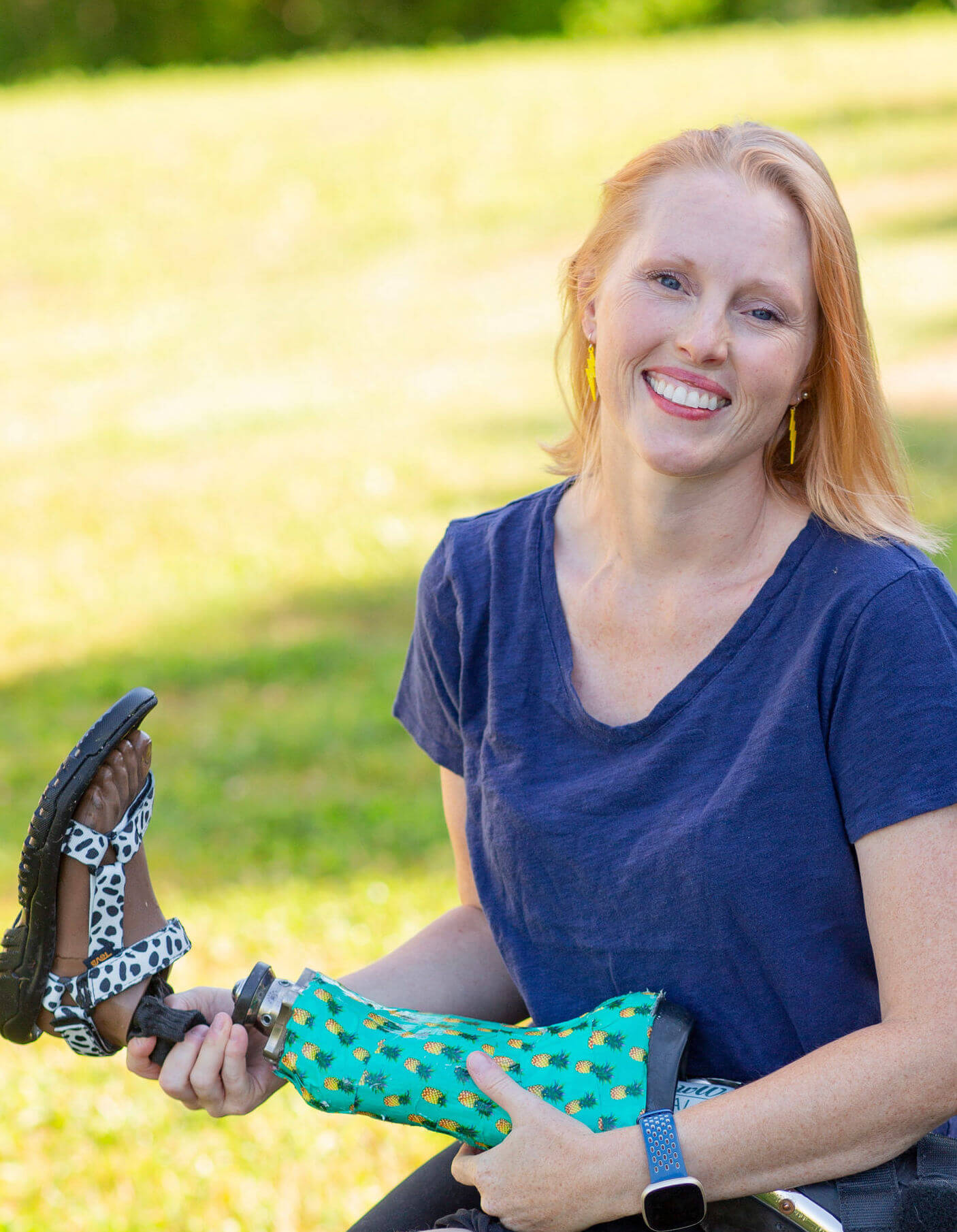

Dr. Ashley Shew
Dr. Shew is a multiply disabled person: tinnitus-buzzing, hard-of-hearing, chemobrained amputee (all due to treatment for bone cancer) with Crohn’s disease (unrelated to bone cancer). She is also a working philosopher of technology and biotech ethicist as a faculty member at Virginia Tech in the Department of Science, Technology, and Society.She has expertise on the subjects of animal studies, disability studies, ethics and emerging technologies, and technological knowledge. She likes the challenge of writing and adapting material for different audiences and communities.

-
Disabled Future Planning Now
The way we talk about technologies and interventions for disability often reinforces ableism – that is, bias against disabled ways of being. Using my experiences as a multiply disabled person in cross-disability community, I explain how we can create better narratives about our futures – and accessible futures more broadly. The future is surely disabled – whether through changing climate and disease patterns, the longterm effects of new diseases (hello, covid), or even through space travel and more hopeful future visions. It’s time we looked closely at how we think about disability technologies to better prepare for our radically disabled futures.
-
Technoableism & Other Biases in Engineering Practice
Shew explains what technoableism is and how we can avoid it by revising engineering practice. While lots of hopeful designers and engineers of all stripes work on technology aimed at disability – from exoskeletons to infrastructure to pharmaceuticals – they often work with ideas about disability that don’t square with the actual experiences of disabled people. In this lecture, Shew shares common tropes and misconceptions about disabled lives and offers different themes about technology that emerge when paying closer attention to what disabled people are actually saying about their experiences. For too long, and with grave consequences, nondisabled people have been the experts about disabled people. Disabled people are regularly excluded (through lack of programmatic access and from ableist culture and expectation) from education that would lend “proper” expertise and credentials on matters that deeply concern us – on projects that are about us. One of the great slogans of the disability rights movement is: “Nothing About Us Without Us.” What does it mean to reconsider engineering norms of practice in light of the longstanding and historical marginalization of disabled people?
-
Against Technoableist AI / Cyborg Meets AI: Technologized Disabled People in the Context of Corporatized Technological Development and Health Management
There are many dangers of having parts of your body owned, managed, or maintained by companies and/or managed care — to be cyborg is to be tracked and surveilled as a regular feature of being a disabled person. I’ll speak about state programs that use electronic visit verification for personal attendant care, about a bionic eye company that went belly up (and left people without sight), about a company that shifted away from a product for lower income folks and left people with unusable cochlear implants in their heads (and no support for repair or replacement), about social media surveillance in denying people disability benefits, about where increased use of AI will overlook some disabled people and look extra hard at others (with implications for education, jobs, and public life). Some of these cases are to help us think about future AI (and don’t constitute AI themselves), but I think are important to understanding the context of being disabled in our society, and regularly living with and relying on technologies. We need historical and lived context for considering, evaluating, and setting prudent policies for AI development.
-
Cyborg Concerns & Disability Services
Following up from ideas in Against Technoableism, this talk takes us through the divergence of rhetoric and experience between typical news coverage about addressing problems related to disability and what The Cyborg Jillian Weise calls “Cyborg Concerns.” Disabled people often center different problems and raise different concerns than our technicians, physicians, and wider society consider important. Professionals in disability services are situated at an important point of contact between these two worldviews, whether or not they are disabled themselves. Being an a11y to disabled people sometimes means working through a system premised on one worldview while trying to serve the interests of another, finding workarounds and serving as translator and informant.
-
Walkie Talkies & Other Technoableist Dreams
This keynote is about walking and talking, and healthcare. Walking and talking are instrumental goods: they are good because of their instrumental value. Walking helps you get places, talking helps you communicate, but they are both good for what they do, and what they let a person do efficiently, but not for what they are. They are not inherently valuable, and there are many more ways to move in the world (crutches, wheelchairs) and to communicate with others (AAC devices, signed languages). Drawing from disability narrative (stories written by disabled people), I depict a world in which healthcare for disabled people gets hung up on walking and talking (often to the exclusion of more important things for disabled people, things we would want). But walking and talking aren’t the only ways to be in the world, and be okay in it. Using the idea of technoableism — the idea that we reinforce ableism, and especially medical ableism, in the way we depict technologies for disability –, I argue that “health” too might be seen as instrumental. It’s what health brings that we want, and getting stuck on certain functionalities can undermine actual progress toward health in its original meaning of wholeness. By focusing on parts and their “deficiencies,” we miss the wholeness that health should entail, and work against human flourishing, and especially flourishing for disabled people.
-
Disability Professionals and Disabled People
Abstract: Drawing from disability-led narratives, this talk characterizes the ways disabled people write about and talk about technological development. The ways disabled people talk and write about technologies often stands in contrast to the ways disability technologies are imagined or presented by most societal narratives. These social narratives about technology often reflect ableist assumptions about what disabled people want or need. Disabled people often center different problems and raise different concerns than expected by many technologists. Professionals in disability services are situated at an important point of contact between worldviews, whether or not they are disabled themselves. Being an a11y to disabled people sometimes means working through a system premised on one worldview while trying to serve the interests of another, finding workarounds and serving as translator and informant. That’s a tough position to be in. How can we think about disability service work and accommodations in more liberatory and disability-forward ways?
See Dr. Ashley Shew in action.


Raising Awareness of Technoableism
Ashley Shew is an associate professor of Science, Technology, and Society at Virginia Tech. Her current research sits at the intersection of technology studies, biotech ethics, and disability studies. She is recipient of an NSF CAREER Award for work on disability narrative about technology, and a principal investigator of an Andrew W. Mellon Foundation-funded Higher Learning project that supports the creation of a regional Disability Community Technology (DisCoTec) Center providing guidance for developing disabled-led technology and disability-forward technological futures through humanities-based scholarship and disability justice education, arts, and outreach. Shew is the author of Against Technoableism: Rethinking Who Needs Improvement (2023) and a forthcoming open textbook, co-edited with Hanna Herdegen, Technology and Disability. Both books focus on the stories disabled people tell about technologies that people do not always expect.
Ashley’s past work has been in ethics of technology with particular interest in technological knowledge, animal studies, and emerging technologies. She is a past co-editor-in-chief of Techné, the journal of the Society for Philosophy and Technology. She is sole author of Technological Knowledge and Animal Constructions (2017) and co-editor of three philosophy of technology volumes: Spaces for the Future (with Joe Pitt, 2017), Feedback Loops (with Andrew Garnar, 2020), and Reimagining Philosophy and Technology, Reinventing Ihde (with Glen Miller, 2020).
Shew believes in cross-disciplinary, cross-disability, and public-facing scholarship: she has written for IEEE Technology & Society, Nursing Clio, Nature, the Chronicle of Higher Education, and Inside Higher Ed. She is a grateful participant with her local disability advocacy and activist communities.
Our speakers get attention.
-
People with disabilities don’t need fixing – the world doesNew, adaptive technologies can be a tool for people with disabilities – but that doesn’t mean everyone wants them.
-
Episode 23-41 Rethinking Being HumanOn this week’s Tech Nation, Moira speaks with Virginia Tech Professor Ashley Shew about “Against Technoableism … Rethinking Who Needs Improvement”.
-
The Received Wisdom PodcastAre robots racist? Should we regulate gene editing? Have people stopped trusting experts? Does scientific research make the world a more unequal place?
-
Stop Depicting Technology As Redeeming Disabled PeopleAbout corn, fancy arms, and the narratives imposed upon me. About a year and half out from my amputation, I visited my local grocery store. I was looking at ears…
-
Ep 66: CyborgsToday’s episode is about cyborgs with Ashley Shew and Jillian Weise. Ashley is an assistant professor at Virginia Tech in the Science, Technology, and Society department and her current work…
-
Against Technoableism: Rethinking Who Needs ImprovementAshley Shew is an associate professor of science, technology, and society at Virginia Tech, and specializes in disability studies and technology ethics.